


Pricing Procedure in SAP MM

Updated: Dec 30, 2025
The Pricing Procedure in SAP MM determines how the system calculates the price of a material during purchasing. It defines a structured sequence of conditions (such as discounts, taxes, and surcharges) that influence the final price in a purchase order.
Below is the path to configure :
SPRO > IMG > Materials Management > Purchasing > Conditions >

Maintain Condition Tables
A Condition Table in SAP MM is used to store condition records for pricing elements such as material price, discounts, and taxes. It defines the combination of fields (like vendor, material, purchase organization) that determine how pricing data is retrieved. It works as part of an Access Sequence to fetch relevant pricing records.
STEP 1: Go to T Code M/08 > provide a Table Number and press Enter.
The system only allows condition tables to be created in the valid name space.
Condition tables defined by SAP: valid namespace is from 001 to 500.
Condition tables defined by customers: valid namespace is from 501 to 999.

STEP 2: Select the Fields from right-hand side and click on Select Field then click on Generate to create Table.

STEP 3: either select a Package to SAVE the Condition Table or save as Local Object.

Access Sequence
An Access Sequence in SAP MM is a search strategy that determines how the system retrieves condition records (pricing data) from Condition Tables during the procurement process. It defines the sequence in which the system checks condition records to find the best price for a material. It is assigned to Condition Types.
STEP 4: Click on New Entries > Provide 4 Digit Alphanumeric code for Access Sequence >>

STEP 5: Select the Access Sequence and then click on Accesses (as seen on left-side) Provide the Table Number and Press Enter
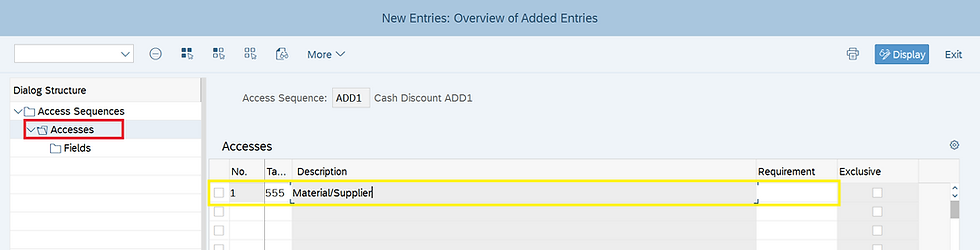
STEP 6: Select the Access and then click on Fields to check the Technical Fields taken by system > SAVE.

Click below for detailed Video Explanation:
Condition Type
A Condition Type in SAP defines a specific pricing element used in purchasing and sales, such as price, discount, surcharge, tax, or freight. It controls how prices are calculated in transactions like Purchase Orders (PO).
STEP 7: Click on New Entries to create condition Type ADDC

STEP 8: Enter the below fields for Condition Type :
Condition Class: Determines the purpose of a condition type (e.g., Price, Discount, Surcharge, Tax, etc.).
Calculation Type: defines how the system calculates the condition value (e.g., price, discount, tax) based on the condition record.
Condition Category: It defines the purpose and processing logic of the condition, such as whether it is a discount, surcharge, tax, or freight charge.
Rounding Rule: The rule that determines how the system rounds off condition values during pricing.
Plus/Minus: Controls whether the condition results in an amount that is negative (discount), positive (surcharge), or whether both positive and negative amounts are possible.
Manual Entries: Indicator that controls the priority within a condition type between a condition entered manually and a condition automatically determined by the system.
Header Condition: If this condition is marked as a header condition, it is possible to enter the condition type in the header condition screen.
Item Conditions: If the conditions of this type are allowed to be entered in the document items.
Delete: Indicator that controls whether the condition type may be deleted from the document.
Amount/Percent: Specifies whether the amount or percentage for the condition type can be changed during document processing.
Pricing Procedure: The system uses the pricing procedure that you enter here to control the use of condition records of this condition type.

STEP 9: Go to T code M/08 or click on "Set calculation Schema - Purchasing"
Click on New Entries and provide Procedure name and Description as seen below and then select the Procedure and click on Control data (left side)

STEP 10: Either Click on New Entries > provide the Step, Condition Type, and other fields / Copy from Standard Pricing Procedure and utilize the condition type of that whichever is necessary.

STEP 11: Go to T Code OMFN (Schema Groups for Suppliers) > Click on New Entries and Provide the 2 Digit Schema Group for Suppliers and Description then SAVE.
Schema Groups for Suppliers: is used to determine which pricing procedure should be applied during procurement transactions

STEP 12: Go to T Code OMFM (Schema Groups for Purchase Organizations)
Click on New Entries and Provide the 4 Digit Schema Group for Purchase Organizations and Description then SAVE.
Schema Groups for Purchasing Organization: They help assign different pricing strategies to different purchasing organizations

STEP 13: T Code OMFP (Assignment Schema Groups for Purchase Organizations )
Click on Position > search for Purchase organization and then provide your Schema Group for Purchase Organization.

STEP 14: Go to T Code OMFO - "Determine Calculation Schema for Standard Purchase Orders "
Click on New Entries and Provide the Schema Group for Purchase Organization, Schema Group for Supplier and Pricing Procedure then SAVE.

Maintain Schema Group Supplier in Supplier's Master Data
STEP 15: Select the BP Role "FLVN01" and go to Purchasing Data Tab then provide the Schema Group Supplier > SAVE.

Maintain Condition Record for Condition Type
A Condition Record in SAP is a stored pricing-related entry that determines the price, discount, surcharge, tax, or freight based on predefined conditions.
STEP 16: Go to T code MEK1 > Enter the Condition Type

STEP 17: Enter Material, Supplier, Amount, Unit and valid from date > SAVE.

Below is the Conditions for the Purchase Order picked by system:

The Pricing Procedure is a fundamental mechanism that ensures accurate price determination in procurement and inventory management. By configuring condition types, access sequences, and calculation schemas, organizations can automate price calculations based on business rules.
#SAPfico #SAPerp #SAPs4HANA #PricingProcedure #ConditionType #ConditionRecord #ConditionTable #AccessSequence #PricingProcedure #MEK1 #SAPconsulting #PravikTech #SAPcommunity


https://28bet8.io/ khiến tôi chú ý đến cách thông tin được chia thành nhiều khu vực thay vì tập trung toàn bộ trên một luồng duy nhất. Khi kiểm tra, tôi lần lượt xem phần giới thiệu, giấy phép, khuyến mãi, hướng dẫn, bảo mật, điều khoản và liên hệ rồi mới chuyển sang các sản phẩm chính. Cách đi từ thông tin nền đến nội dung sử dụng giúp tôi dễ xác định mình cần tìm gì ở từng thời điểm. Tôi đặc biệt quan sát những phần liên quan đến điều kiện khuyến mãi và quy định tài khoản vì đây là các nội dung thường cần đọc kỹ. Với trải nghiệm này, tôi đánh giá việc phân tách chuyên…
tài xỉu md5 được tôi quan sát ở cách hệ thống phân bổ nhiều nhóm nội dung trên cùng một nền tảng. Tôi thử xem qua các khu vực trò chơi, tài khoản, giao dịch và hỗ trợ để đánh giá xem chúng có được phân chia đủ rõ hay không. Khi số lượng chuyên mục tăng lên, menu rất dễ trở nên rối nếu không có cách gom nhóm hợp lý. Vì vậy, tôi không quá chú trọng việc có bao nhiêu lựa chọn mà quan tâm hơn đến khả năng nhận biết từng nhóm. Trải nghiệm thực tế cho thấy nếu cấu trúc vẫn giữ được logic, người dùng sẽ dễ chuyển đổi giữa các nội dung mà không…
XX88 cho tôi một góc nhìn khá rõ khi đánh giá cách một thư viện nhiều trò chơi được tổ chức theo nhà cung cấp. Tôi thường bắt đầu bằng một nhóm nội dung, xem danh sách provider rồi thử lọc theo từng tên để kiểm tra khả năng thu hẹp lựa chọn. Khi mở một game và quay lại, tôi quan sát xem bộ lọc trước đó có còn được giữ hay người dùng phải thiết lập lại từ đầu. Tôi cũng chú ý cách các nhà cung cấp được đặt tên và liệu người mới có thể hiểu đây là tiêu chí phân loại hay chỉ là thông tin giới thiệu. Với một thư viện lớn, việc đưa nhiều…
Khi đánh giá 88VBET, mình chú ý đến khả năng giảm thao tác dư khi chuyển giữa các khu chức năng. Menu và những khu vực chính được trình bày khá rõ, giúp mình không cần mở quá nhiều lớp để xác định nội dung cần xem. Mình thử đi qua một vài chuyên mục rồi quay lại trang chính để kiểm tra luồng sử dụng. Ở giữa quá trình này, casino, bắn cá và thể thao được sắp xếp theo từng nhóm nên việc nhận diện nội dung khá nhanh. Phần hướng dẫn cũng tạo thêm điểm tham chiếu khi cần tra cứu. Ngoài ra, tốc độ tải tương đối ổn khi mở các khu mới. Với mình, một hệ…
b52 cho mình cảm giác khá trực quan khi quan sát cách các nhóm nội dung được sắp xếp trên giao diện. Mình thử chuyển qua game bài, bắn cá và xổ số để kiểm tra khả năng tìm kiếm từng khu vực. Các chuyên mục được phân chia tương đối rõ, giúp mình dễ xác định vị trí cần truy cập mà không phải thực hiện quá nhiều thao tác. Trong quá trình trải nghiệm, mình nhận thấy bố cục giữa các phần có sự cân đối, thông tin không bị dồn vào một khu vực duy nhất. Khi chuyển trang liên tục, tốc độ phản hồi khá đều, các thành phần hiển thị ổn định và việc điều hướng…